
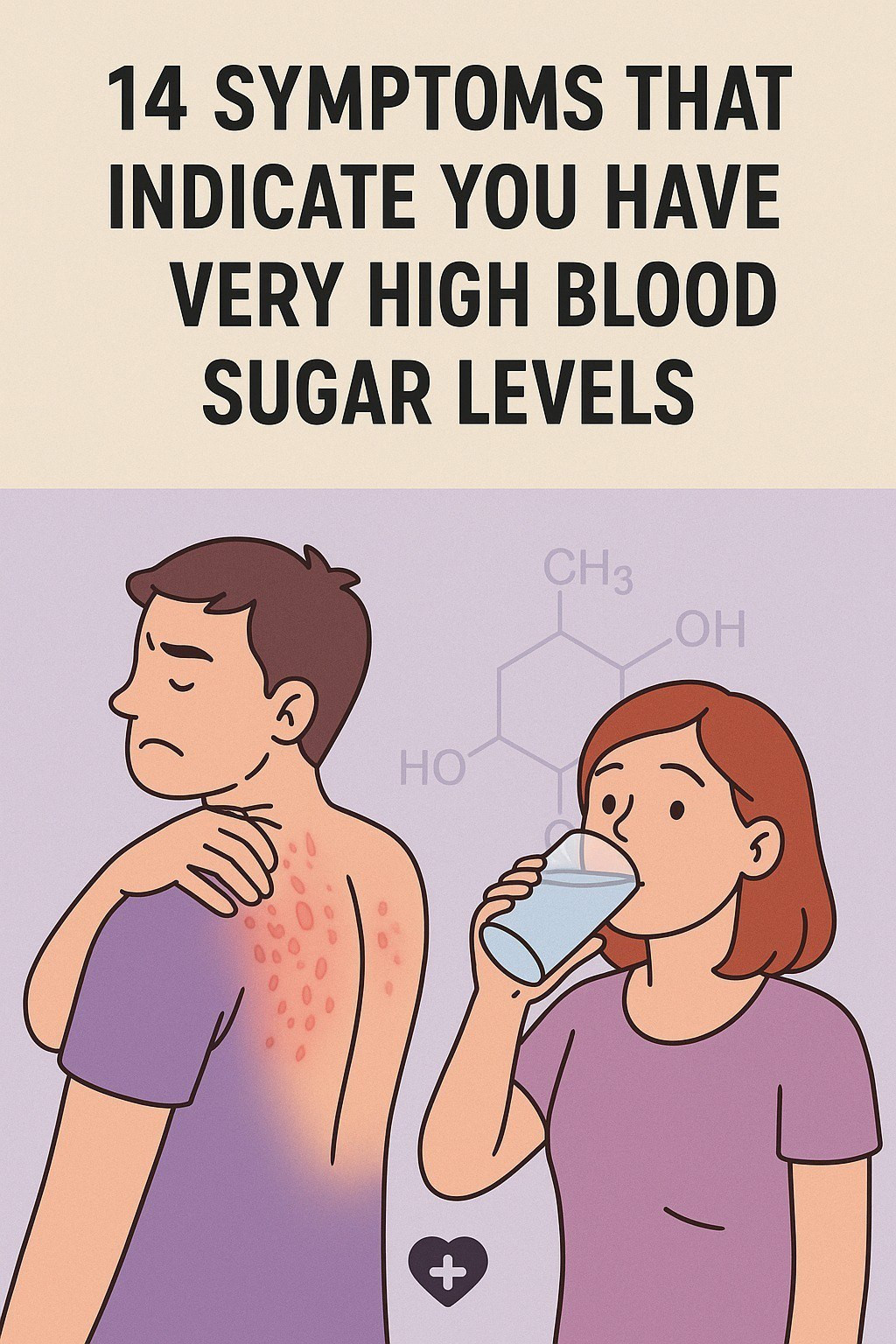
Signs That You Have Too Much Sugar in Your Blood
In this article, we’ll explore the 14 most common symptoms of hyperglycemia, along with practical strategies to help maintain healthy blood sugar levels. So keep reading to see whether it’s time to take action for your health
What Is High Blood Sugar?
High blood sugar, or hyperglycemia, occurs when the body has too little insulin (the hormone that processes blood sugar) or when the body can’t use insulin properly. As a result, glucose builds up in the bloodstream instead of being used for energy. This can manifest through a variety of symptoms, which range from mild to severe
14 Main Symptoms That Indicate High Blood Sugar Levels
Frequent Urination (Polyuria): This is one of the most common and earliest signs of high blood sugar. Your kidneys work overtime to filter and absorb the excess sugar. When they can’t keep up, the sugar is excreted in your urine, pulling fluids from your tissues along with it.
Excessive Thirst (Polydipsia): Because you’re urinating so frequently, your body loses a lot of fluids, which triggers a feeling of intense thirst. This creates a cycle: you urinate more, which makes you feel thirstier, so you drink more.
Increased Hunger (Polyphagia): Despite eating, your cells aren’t getting the glucose they need for energy. This sends a signal to your brain that you are hungry, even after a meal.
Fatigue: When your cells can’t use glucose for energy, your body becomes starved for fuel. This leads to a constant feeling of tiredness and weakness, no matter how much you rest.
Blurred Vision: High blood sugar can cause the lens of your eye to swell, affecting your ability to focus. This can make your vision blurry and is often one of the first signs people notice.
Unexplained Weight Loss: When your body can’t get energy from glucose, it starts to break down muscle and fat for fuel, leading to rapid and unexplained weight loss.
Slow-Healing Wounds: High blood sugar can impair blood circulation and nerve function, making it difficult for your body to heal cuts, bruises, and infections.
Frequent Infections: High blood sugar can weaken your immune system, making you more susceptible to infections, especially urinary tract infections (UTIs) and yeast infections.
Tingling or Numbness in Hands or Feet: High blood sugar can damage nerves, a condition known as neuropathy. This can lead to a tingling, prickling, or numb sensation in your hands, feet, and legs.
