
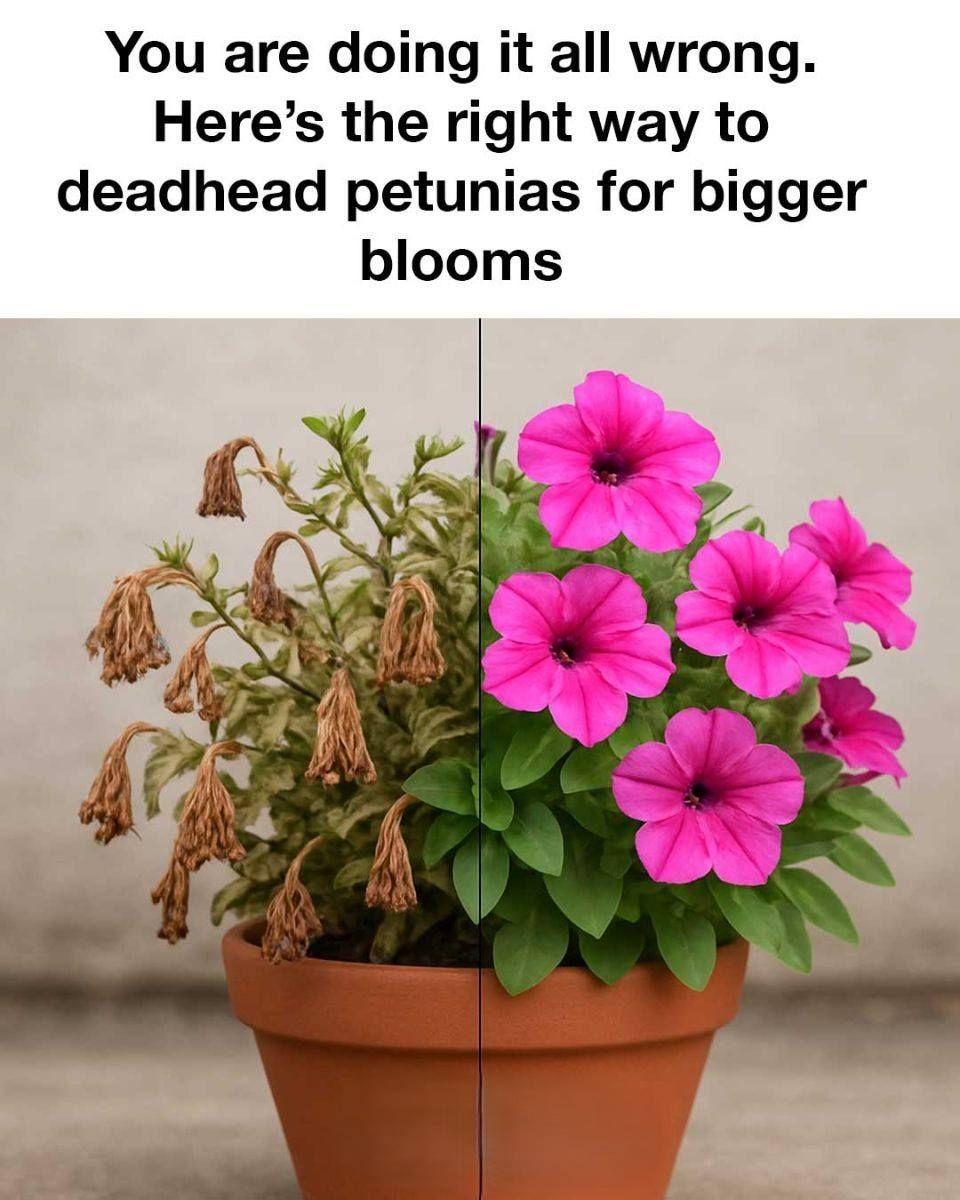
5. Step-by-Step Guide to Properly Deadhead Petunias
Identify spent flowers: Look for wilted or faded blooms.
Locate the base of the flower: Follow the stem to where the flower meets the main stem or a leaf node.
Use your tool: Make a clean cut just above the leaf node or main stem, removing the entire flower and seed pod.
Dispose of debris: Collect spent flowers and seed pods to keep the area clean.
Repeat regularly: Check every few days to maintain continuous blooms.
6. The Role of Weather and Season in Deadheading
Hot and dry weather: Flowers wilt faster, requiring more frequent deadheading.
Cooler, wetter weather: Blooms last longer and may need less frequent attention.
Seasonal timing: Early spring requires less deadheading, while summer demands more consistent care.
7. Viral Hacks: What Works and What Doesn’t
What doesn’t work: Using nail clippers or kitchen scissors, which are often too dull.
What works: Lightly misting the plant with water before deadheading to soften the flowers and make removal easier.
Always ensure your tools are clean and sharp.
8. How Deadheading Affects Bloom Size and Frequency
Proper deadheading:
Increases the number of blooms.
Produces larger flowers.
Extends the blooming season.
When you prevent seed formation, the plant channels energy into creating more flowers.
9. Tips for Maintaining Healthy Petunias Post-Deadheading
Water regularly to keep soil moist but not soggy.
Fertilize every two to three weeks with balanced, water-soluble fertilizer.
Watch for pests and diseases and address issues quickly.
10. Expert Advice: Insights from Professional Gardeners
Be consistent with deadheading.
Avoid over-fertilizing, which can create more foliage than blooms.
Maintain balanced nutrition and good watering practices.
